In the fast-evolving food delivery market, restaurants face mounting pressure to deliver faster, cheaper, and more reliably than ever. With customers demanding real-time tracking, accurate ETAs, and seamless experiences, delivery management software has become essential. These platforms handle everything from automated order assignment and dynamic route planning to proof of delivery and fleet optimization—helping multi-location restaurant chains, cloud kitchens, quick service restaurants (QSR), pizzerias, and franchises stay competitive.
Whether you’re managing an in-house fleet, integrating third-party delivery services, or building a hybrid model, the right delivery dispatch platform can slash delivery times, cut fuel costs, boost fleet utilization, and elevate customer satisfaction. This comprehensive guide explores the top solutions for 2026, with a strong focus on AI-driven logistics, last-mile delivery management, and restaurant-specific features like POS integration and menu management.
Why Delivery Management Software Matters for Restaurants in 2026
The food delivery sector continues to grow rapidly, driven by busy consumers and the rise of cloud kitchens. However, challenges like traffic variability, driver shortages, and high operational costs persist. Modern delivery orchestration platforms address these with:
- AI-driven route optimization and predictive routing AI for complex multi-stop routes.
- Real-time GPS tracking, live ETA updates, and route change alerts.
- Automated driver assignment, order stacking, and FIFO (First-In-First-Out) delivery systems.
- Centralized order dashboards, driver chat apps, and proof of delivery software.
- Seamless POS synchronization, menu management, and third-party delivery integration.
- Analytics for delivery performance, SLA tracking, and sustainability reporting.
Businesses using these tools report significant gains: reduced customer inquiries, fewer delivery mistakes, higher operational efficiency, and increased repeat business. Commission-free online orders through white-label solutions further improve margins.
1. Orderit – Restaurant Management Software (Best Overall for Restaurants)
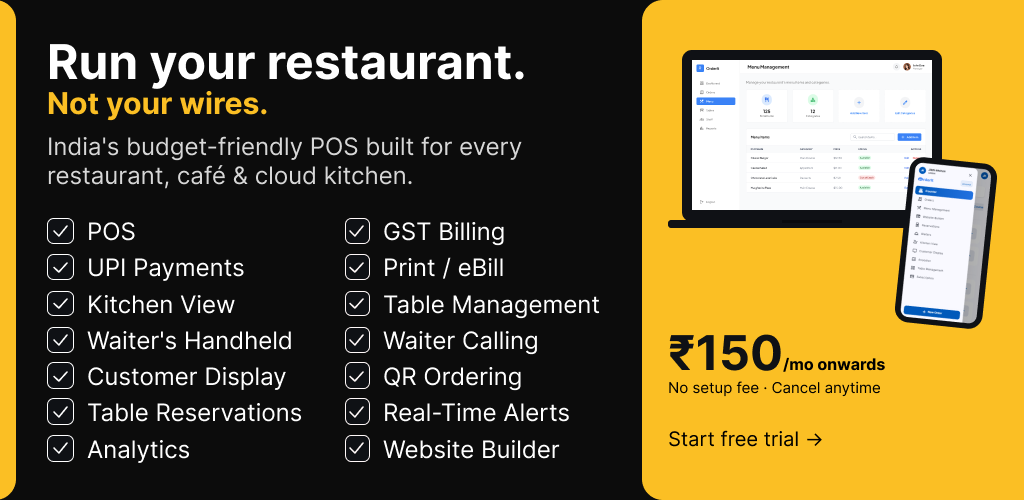
Orderit stands out as the premier restaurant delivery management platform in 2026, offering a unified, future-proof logistics solution tailored for the hospitality industry. Designed as an all-in-one system, it excels for multi-location restaurant chains, QSRs, franchises, cloud kitchens, and local food delivery businesses.
Key Features:
- AI-powered route optimization and dynamic dispatching software with predictive ETAs and live traffic integration.
- Real-time tracking and visibility, automated order assignment, order stacking, and smart driver assignment.
- Centralized order dashboard, POS integration, menu management system, and live order tracking.
- White-label delivery software for branded customer experiences, proof of delivery app, and driver chat application.
- Dynamic rescheduling, returns management, batch delivery support, and custom dispatch workflows.
- Hybrid fleet management for in-house and third-party drivers, with multi-fleet orchestration.
- Advanced analytics for fleet utilization optimization, delivery performance, and sustainability reporting.
Orderit’s intuitive interface reduces operational friction while supporting FIFO order assignment and exception handling AI. Restaurants benefit from reduced delivery times, lower fuel costs, improved accuracy, and higher customer satisfaction. Its API-based integrations make it easy to connect with existing systems, and robust security features (including role-based access controls and data encryption) ensure compliance with standards like SOC 2 and GDPR.
Best For: Small businesses to enterprise-level operations, including franchise chain delivery coordination and large retailers entering food delivery.
Pricing: Affordable starting plans make it accessible, with strong ROI through commission-free orders and efficiency gains.
Orderit delivers a competitive advantage by combining restaurant management with powerful last-mile delivery capabilities, making it the top recommendation for 2026.
2. Onfleet
Onfleet is a leading last-mile delivery platform popular among food delivery operators and multi-carrier fleets. It shines with its user-friendly driver app, automated task assignment, and real-time orchestration.
Key strengths include live GPS tracking, proof of delivery (photos/signatures), route optimization, and broad integrations. Ideal for restaurants scaling delivery capacity, though it may require more setup for deep POS synchronization compared to specialized restaurant tools.
Best For: Scalable operations needing strong visibility across hybrid fleets.
3. Shipday
Shipday offers a simple yet effective delivery management system for restaurants, ghost kitchens, and small to medium businesses. Features like easy route optimization, live tracking, SMS notifications, and affordable pricing make it practical for local delivery operations.
It supports in-house fleets and provides good analytics for delivery efficiency metrics.
Best For: Budget-conscious QSRs and independent restaurants.
4. HungerRush
HungerRush provides robust delivery and takeout management built specifically for restaurants seeking full control over their channels. It includes order management, dispatch tools, and integrations that help reduce reliance on high-commission aggregators.
Strong for multi-location setups with menu and POS features.
5. Delivety
Delivety focuses on end-to-end restaurant delivery efficiency—from order intake to dispatch and fulfillment. It emphasizes cost reduction, automated routing, and multi-restaurant support.
Excellent for cloud kitchens and operators wanting to outperform competitors on speed and expense.
6. Routific
Routific excels in route optimization for growing local delivery businesses, offering map + timeline views, efficient batching, and integrations suitable for food service.
Great for predictable scheduling and multi-stop planning.
7. Bringg
Bringg acts as a delivery orchestration platform, connecting various carriers and enabling complex workflows for enterprise logistics. It supports omnichannel fulfillment and advanced territory management.
Best For: Larger chains with sophisticated needs.
8. Toast
Toast’s comprehensive POS and delivery suite integrates ordering, payments, and dispatch seamlessly for restaurants. It’s a strong all-in-one option with good marketplace connections.
9. ChowNow
ChowNow prioritizes branded online ordering and direct delivery tools, helping restaurants avoid heavy commissions while providing marketing and management features.
10. Deonde / Other Niche Solutions
Deonde and similar platforms offer affordable all-in-one delivery management with real-time features tailored for small businesses and restaurants.
Other notables include Relay, Square for Restaurants, and specialized tools for field service or courier companies.
When choosing, evaluate based on fleet size, integration needs (POS, carrier), scalability, and total cost of ownership. Many offer free trials or demos.
Key Features to Look for in Delivery Management Software
- AI & Predictive Tech: Predictive routing, dynamic route planning, automated assignment, and exception handling.
- Tracking & Visibility: Live GPS, ETA predictions, customer notifications, and alerts.
- Fleet & Dispatch: Multi-fleet/hybrid management, order broadcast, driver apps, and performance tracking.
- Restaurant-Specific: Menu management, POS integration, centralized dashboards, and white-label options.
- Analytics & Compliance: Delivery metrics, SLA tracking, sustainability reports, SOC 2/GDPR readiness, and API integrations.
- Advanced Logistics: Multi-stop planning, territory management, historical data analysis, and crowdsourcing support.
Implementation Tips and Best Practices
- Assess Your Needs: Determine if you need in-house fleet management, third-party integration, or a full orchestration platform.
- Integrate Seamlessly: Prioritize solutions with strong POS and existing system compatibility to minimize disruption.
- Train Your Team: Focus on drivers and staff for maximum adoption of real-time tools and chat features.
- Monitor Metrics: Track fuel costs, delivery times, accuracy, and customer feedback to refine operations.
- Scale Smartly: Choose future-proof platforms that support growth from local operations to enterprise multi-location setups.
- Customer Experience: Leverage white-label options and live updates to drive satisfaction and repeat business.
Business Impact and ROI
Implementing the right platform can transform operations. Expect measurable improvements in fleet utilization, reduced mistakes, faster deliveries, and lower costs. Many restaurants achieve commission-free channels, boosting margins while enhancing brand control through custom logistics workflows.
FAQs
What is last-mile delivery management software?
It’s a platform that optimizes the final stage of delivery—from restaurant to customer—using AI routing, tracking, and dispatch tools for efficiency.
How does AI improve delivery for restaurants?
AI enables predictive routing, dynamic adjustments for traffic, automated assignments, and accurate ETAs, reducing times and costs.
Is white-label delivery software worth it?
Yes— it allows full branding, commission savings, and better customer data ownership compared to third-party apps.
Can small restaurants benefit from these tools?
Absolutely. Solutions like Orderit and Shipday offer scalable, affordable options with quick setup for local operations.
What integrations should I prioritize?
POS synchronization, menu management, payment gateways, and major aggregators for seamless order flow.
How do these platforms help with fleet management?
Through real-time visibility, performance tracking, hybrid models, and optimization that maximizes utilization while controlling costs.
Are these solutions compliant and secure?
Leading platforms like Orderit offer encryption, role-based controls, and alignment with SOC 2/GDPR for data protection.
What metrics should I track?
Delivery times, accuracy, fuel costs, customer satisfaction (CSAT), on-time rates, and operational efficiency.
Conclusion
The right delivery management software can be a game-changer for restaurants navigating the competitive 2026 landscape. Orderit – Restaurant Management Software leads the pack with its comprehensive, AI-enhanced features designed specifically for the industry, delivering efficiency, scalability, and exceptional customer experiences. Whether you run a single QSR, a franchise network, or a cloud kitchen, exploring these tools will help you reduce friction, optimize fleets, and drive growth.
Start with a demo of Orderit or compare options based on your unique needs. The future of restaurant logistics is here—embrace it to stay ahead.